
Shower Tanking & Waterproofing in Stone
Specialist wall and floor tiling — including large-format and stone.
Tiles and grout are not waterproof. They're the wearing surface. The waterproofing is the layer behind them, and it's the part nobody sees — which is exactly why it's the part most often skipped on a Stone bathroom.
We tank as a separate, deliberate stage: board the substrate, tape and seal every internal corner and junction, collar the pipe penetrations, then two coats of membrane with the second at right angles to the first.
Homeowners in Stone tend to call us once the old bathroom has been patched one time too many, and bathroom & wet-zone tiling is finally on the list.
Coverage around Stone
Within a short drive of Stone we regularly fit bathrooms in:
Service radius is approximate and based on our regular weekly routes.
About Stone
Stone sits in Staffordshire, served by Stafford Borough Council, with postcodes ST15. Stone is a Georgian canal-side market town — sash-windowed townhouses in the centre, Victorian villas on Stafford Road, plus large modern estates at Walton and Yarnfield. Main routes through are A34 and A51, which is why our vans pass close to Stone most days.
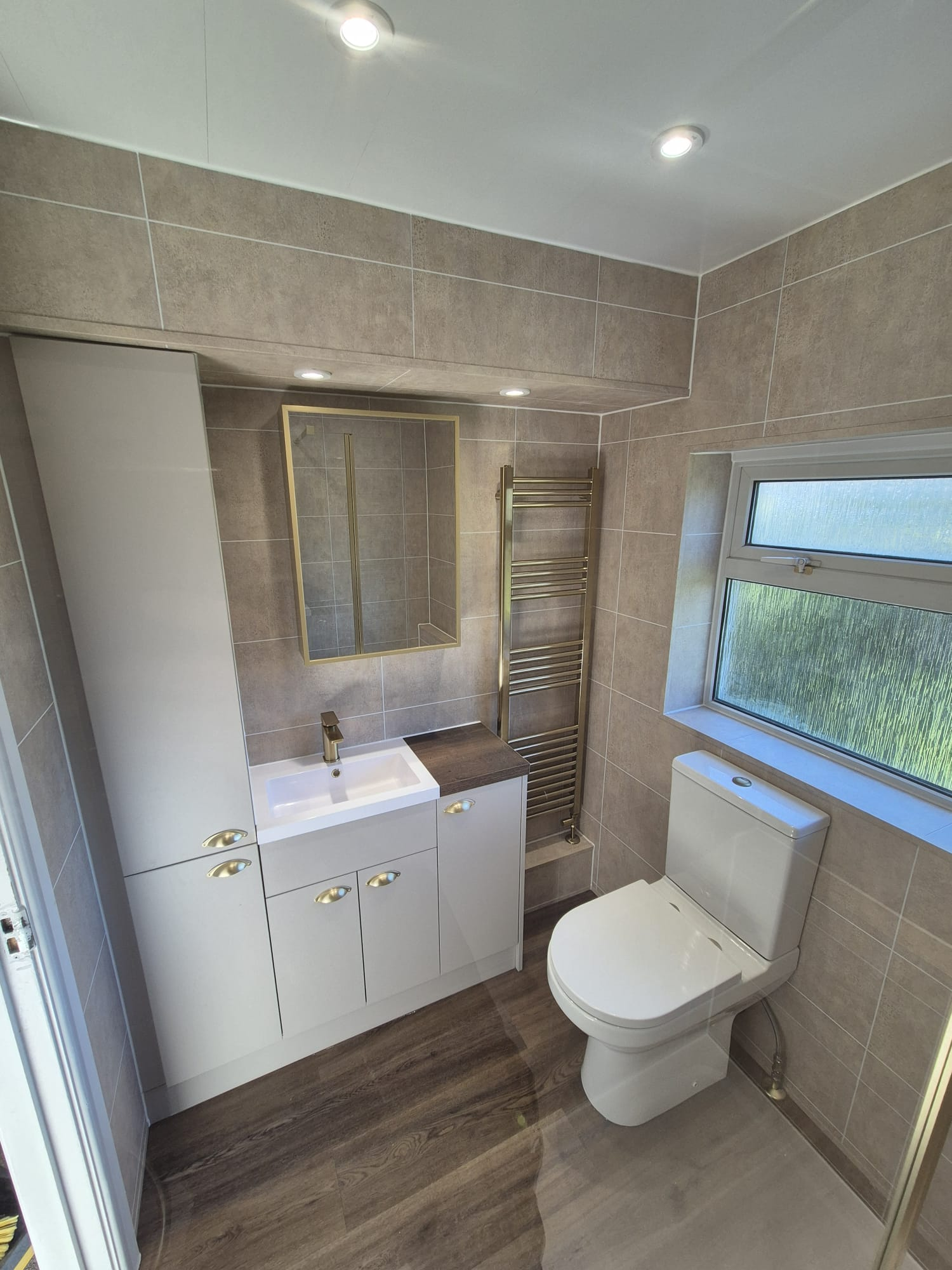
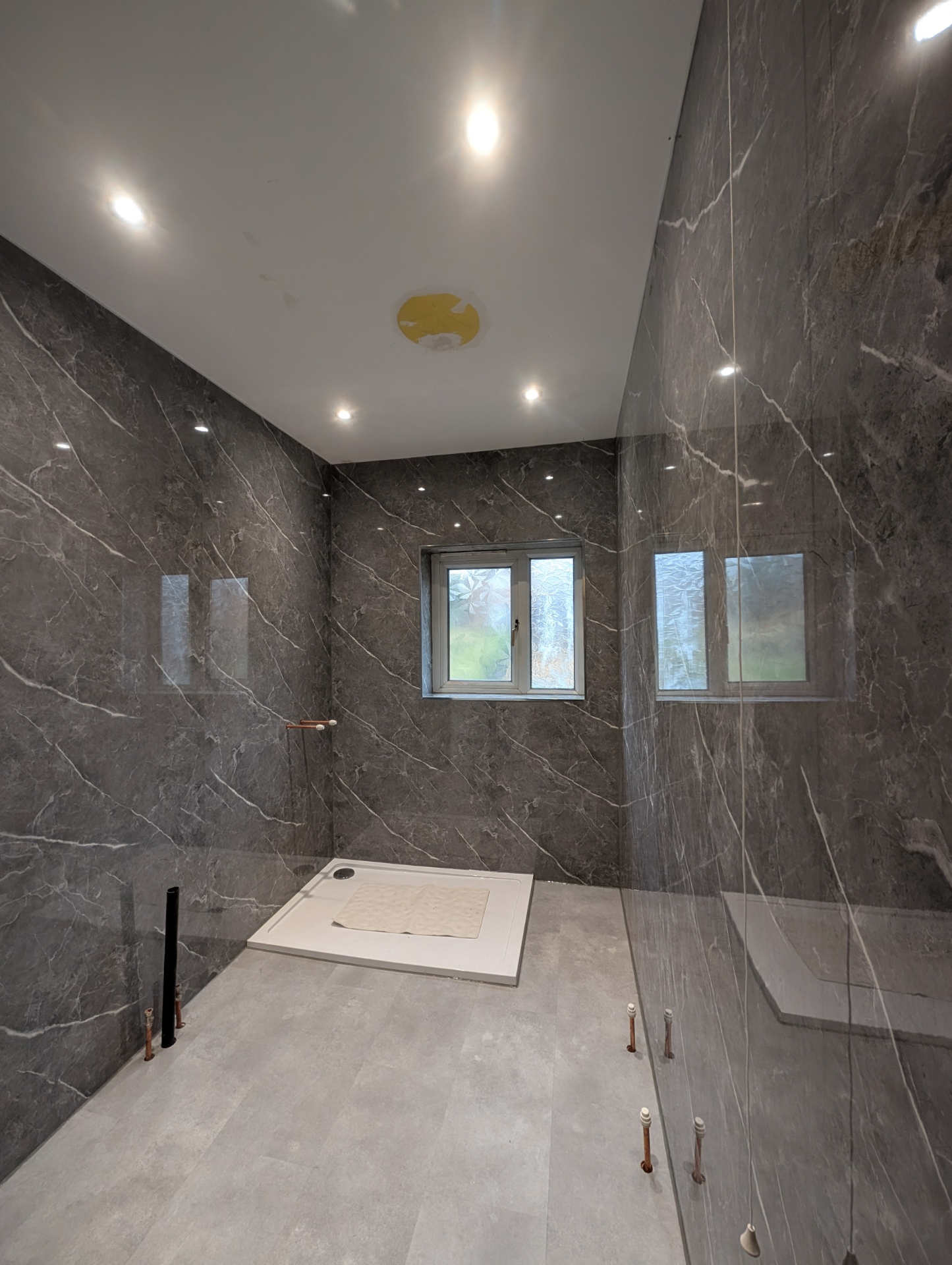
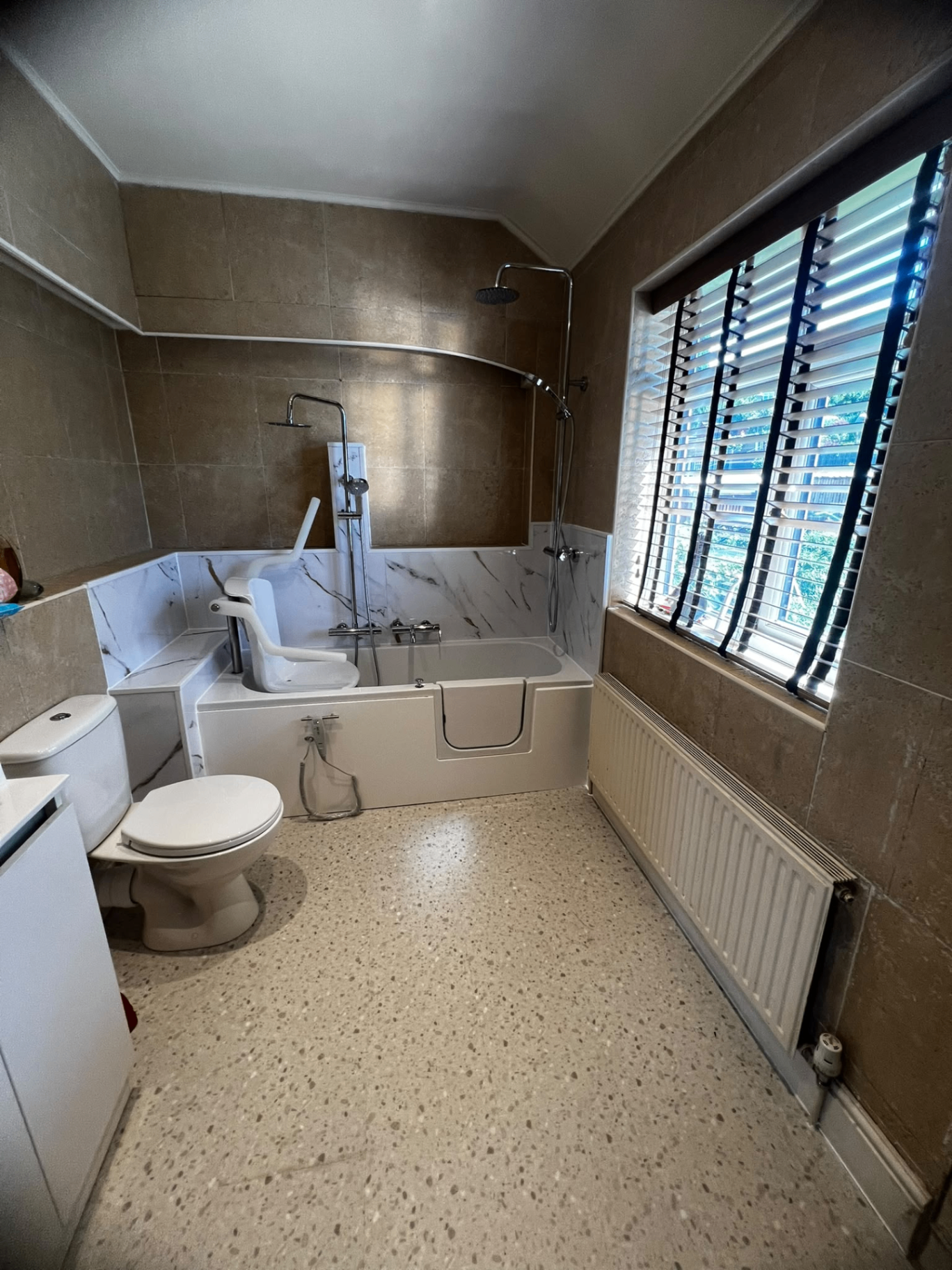
Our shower tanking & waterproofing process in Stone
Nothing is left vague, this is the sequence we work to from strip out to handover:
- 1Next on a Stone fit: hand-cut and diamond-cut every detail — inside corners, recesses, niches.
- 2Step 2 in Stone: notch-trowel a rapid-set adhesive matched to tile and substrate.
- 3Stage 3 on site at Stone: strip existing tile, check substrate and skim where needed.
- 44. Grout with a colour matched to the tile, sponge clean as we go, agreed with you before we start in Stone.
- Mapei Keraflex Maxi S1 for large-format porcelain — specced for Stone jobs.
- We fit natural stone (marble, travertine — sealed before grouting) on Stone projects.
Other services in Stone
Tanking shortcuts we find in {town}
Anyone tiling a wet area who wants it waterproof behind the tiles in Stone hit a recurring set of issues with shower tanking & waterproofing:
Membrane rolled over standard plasterboard in a full wet zone — flagged regularly on Stone jobs.
Internal corners painted rather than taped, so movement splits the membrane — flagged regularly on Stone jobs.
Pipe penetrations left uncollared — the one place water always finds — flagged regularly on Stone jobs.
A frequent find on Stone strip outs: wrong adhesive on porcelain leaving slow cure and edge cracks.
In Stone we regularly find floors not level, causing lippage between large-format tiles.
Waterproofing questions from {town}
- Do I need tanking if I'm only tiling one wall in Stone?
- If that wall takes direct shower spray, yes. Outside the wet zone in a normal Stone bathroom, a sound boarded substrate is generally sufficient.
- Can you tank over plasterboard?
- Standard plasterboard isn't the right base for a wet zone. We replace it with a suitable tile backer board in the shower area, then tank that.
- What about the joint between wall and tray?
- That junction gets sealing tape bedded into the membrane before tiling, plus a silicone movement joint afterwards. Two lines of defence, not one.
- How long before you can tile?
- The membrane needs its full cure between coats and before tiling. On a Stone job that normally means the tanking stage occupies its own day in the schedule.
- Do you provide a fixed-price quote before starting?
- Always. After a free home visit in Stone we send a fully itemised, fixed-price quotation — no surprises on invoice day.
- Can you do large-format porcelain in a small Stone bathroom?
- Yes — 600x600 and 1200x600 porcelain work well in Stone bathrooms when the walls are skimmed flat and set out properly, making the room feel bigger.
Tank it properly before the tiles go on
Free Stone survey of the substrate, plus photos of the tanked walls before tiling starts so you can see what you paid for.
- Tile-only or supply-and-fit options in
- Specialists in large-format and natural stone
Shower and wet-room tanking in Stone — backer board, taped junctions, collared penetrations and a two-coat membrane before any tile.