
A shower repair should address the source of the fault, not simply cover its symptoms. The existing bathroom repairs service includes leak diagnosis, waterproofing fixes and silicone re-sealing around showers. If you are looking for shower repairs near you in Stoke-on-Trent & surrounding areas, explain where the water appears, when it happens and whether the shower still operates normally.
Ready to hire? Meet our bathroom fitters in Stoke-on-Trent: own plumbers, tilers and electricians, fixed quote in 24 hours.
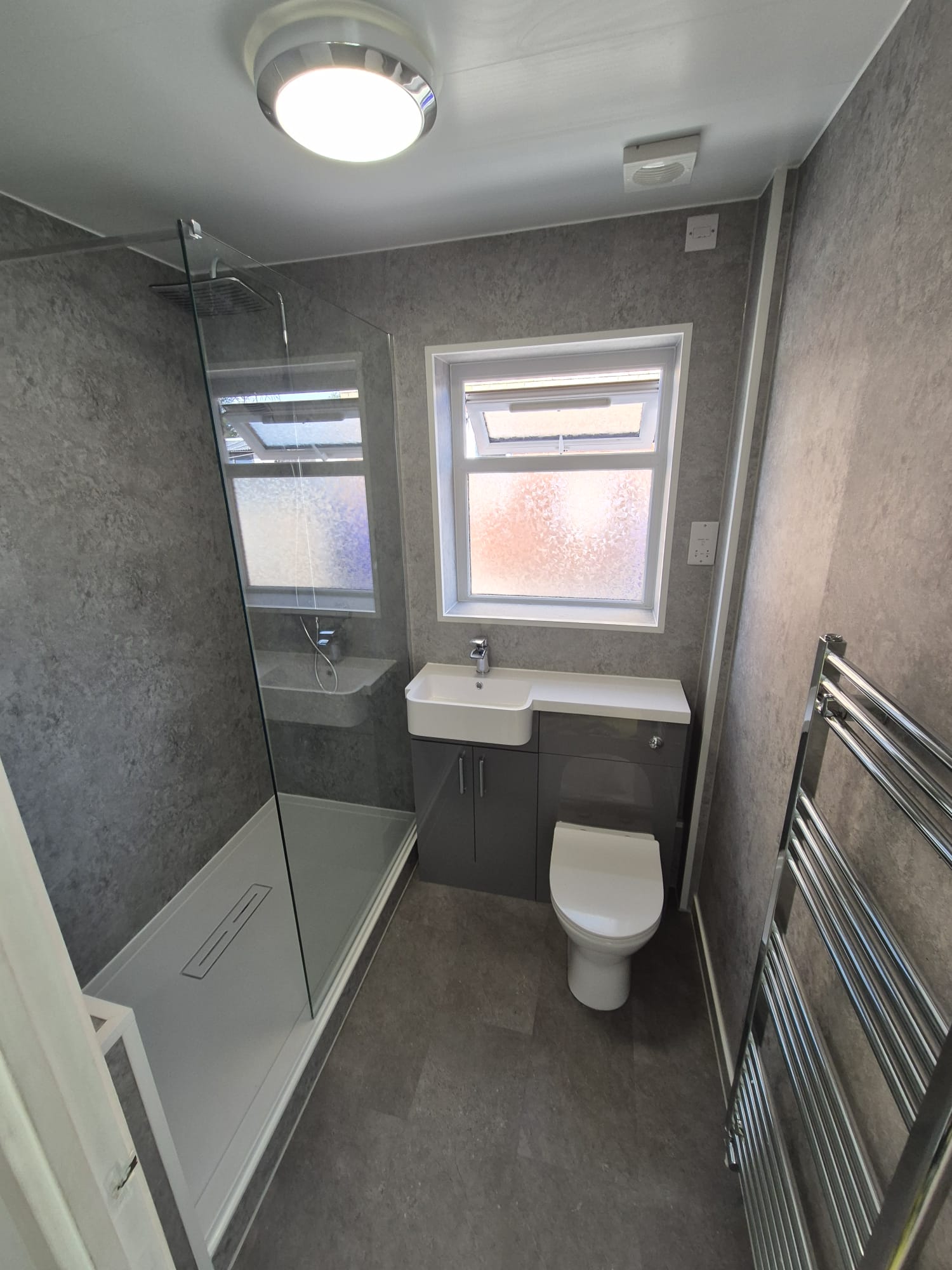
A leaking shower is not always a failed seal
Water outside an enclosure may come from a screen seal, a tray joint, the waste connection or pipework behind the wall. A stain on the ceiling below does not identify which one has failed. Notice whether the leak happens while spraying the screen, while water drains or after the shower has been off for a while. Do not keep running the shower to recreate a large leak. Photographs of the stain and the shower can be useful without dismantling anything.
When to stop using the shower
Stop using a shower that is leaking through a ceiling, soaking nearby electrics or causing the floor to feel soft. If safe, isolate the water supply using an accessible valve you recognise. Do not remove electrical covers or touch a wet switch. A burning smell, heat around an electrical fitting or visible electrical damage needs urgent attention from an appropriately qualified professional. This page does not advertise a 24-hour shower repair service; call to check availability rather than assuming an emergency response.
Screen seals, silicone and the tray edge
A leaking shower screen can have a damaged bottom seal, an incorrectly seated door or a gap around its frame. Silicone failure may instead reflect movement underneath the tray. Applying sealant over wet, mouldy or loose material is not a lasting repair. The joint needs a suitable clean, dry surface and the cause of any movement must be considered. Follow the enclosure manufacturer’s sealing instructions: blocking a drainage path within a frame can direct water into the wrong place.
When the shower is not working properly
A shower that runs cold, loses flow or drips when switched off has a different diagnostic path from a leaking enclosure. Tell us whether other taps work normally, whether the fault changes when another outlet is used and whether the shower is electric or fed by a mixer. A valve fault, water-supply issue and electrical fault should not be treated as interchangeable. Do not open an electric shower casing or adjust concealed parts without the appropriate knowledge and safe isolation.
Hidden leaks and damaged finishes
Cracked grout or loose tiles can allow water to reach vulnerable backing, but replacing the visible tile alone may leave the underlying problem. A waterproofing assessment considers joints, corners and penetrations as well as the finish. Access to a concealed connection may require some tiles or boxing to be removed. Discuss the extent of making good and whether matching tiles are available. Keep spare tiles if you have them; an exact replacement may be difficult to source after a range has changed.
Repair, replacement or a larger change?
A worn screen seal or isolated joint may need a limited repair. Repeated leaks from a moving tray, deteriorated backing or inaccessible pipework can require a more substantial intervention. Ask for the fault and proposed remedy to be explained before choosing a replacement shower. A new shower head will not cure a failed waste or damaged waterproofing. If access is also becoming difficult, compare repairing the current arrangement with a planned bath-to-shower conversion, rather than committing to cosmetic work that will soon be removed.
What to send with a repair enquiry
Describe the shower type, approximate age if known, symptoms and where water escapes. Note any work already attempted and whether chemicals have been used in the drain. Include photographs of the enclosure, valve and affected surfaces, but do not expose wiring or lift a damaged ceiling to take them. Your insurer decides whether a shower leak is covered under your policy; do not assume the cause or cost is covered. Request an assessment and a clear scope for repair and making good before authorising work.
Common questions
Why does my shower leak when it is off?
Residual water can drain from the head briefly, but continued dripping or a hidden leak may involve a valve or supply connection. The source needs checking; enclosure sealant is not a remedy for every leak.
Will insurance cover a shower leak?
Cover depends on your policy, the cause and the circumstances. Contact your insurer, document visible damage safely and stop further water use where possible.