
Worn joints can make an otherwise serviceable bathroom difficult to keep clean. Stoke on Trent Bathrooms handles silicone re-sealing, grout cleaning, full regrouting and tile repairs across Stoke-on-Trent and surrounding areas. The aim is to retain sound fittings and finishes while dealing with failed joints properly. Before choosing a cosmetic refresh, distinguish surface staining from loose material, movement or water getting behind the tiles.
Ready to hire? Meet our bathroom fitters in Stoke-on-Trent: own plumbers, tilers and electricians, fixed quote in 24 hours.
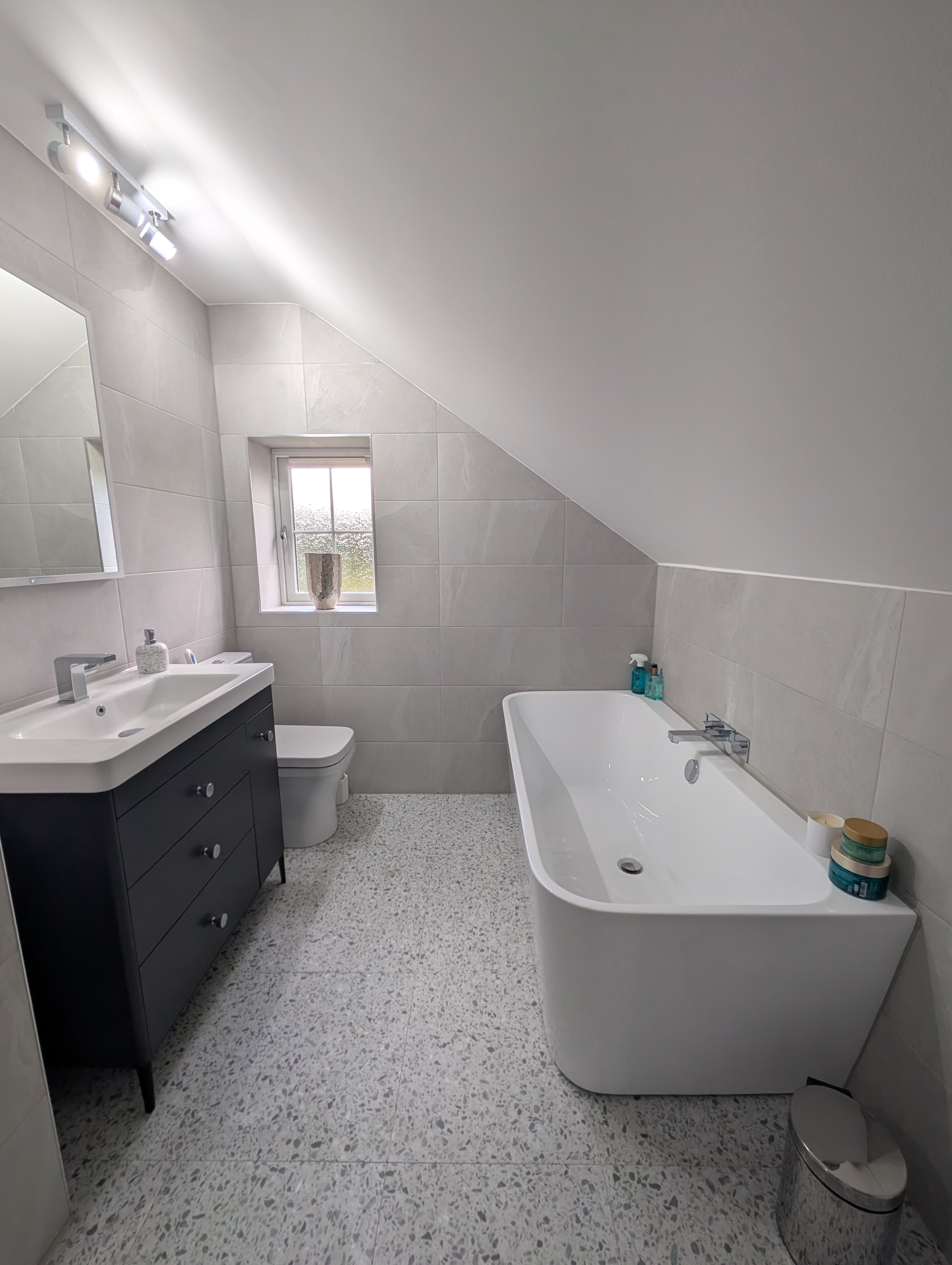
Silicone and grout do different jobs
Grout fills the joints between tiles. Flexible sanitary silicone is used at junctions that need to accommodate movement, including many bath edges, tray edges and internal corners. One is not a substitute for the other. A rigid grout line at a moving bath edge may crack again even after careful renewal. Equally, spreading silicone over a whole tiled area is not a way to restore the grout. The repair should identify which joints have failed and use materials appropriate to their position.
Cleaning or removing the old material?
Discolouration alone does not establish that every joint needs removing. Sound grout may benefit from cleaning, while crumbling, missing or persistently cracked grout needs closer assessment. Silicone that has lifted from the edge or developed gaps generally needs removal rather than another bead over the top. Tell us what cleaners or previous repair products have been used. Abrasive methods and strong chemicals can damage some tiles and fittings, so the tile surface and existing finish matter when deciding how to prepare the area.
Check the backing before refreshing the face
A tile that moves, a soft wall or a tray that shifts under normal use points beyond a tired finish. Regrouting cannot stabilise a loose tile bed, and a fresh perimeter seal cannot compensate for an unsupported tray. Report recurring cracks, damp in adjoining rooms and any ceiling stain below. These symptoms may change the job from joint renewal to a repair of the underlying construction. Grout is not the complete waterproofing system; replacing it does not establish that the layers behind the tiles are sound.
What a joint-renewal scope should cover
Agree whether the work concerns one perimeter, selected damaged joints or the whole tiled area. Preparation should remove failed material without unnecessarily damaging tile edges or sanitaryware, followed by suitable cleaning and drying. The proposed grout colour should be checked against the existing finish; an older grout may have changed shade with use. For silicone, discuss the junctions included rather than assuming every visible edge should be sealed. Shower enclosure frames have their own drainage arrangements, so their sealing instructions must be respected.
Allow for drying and first use
A bathroom that is used immediately before the visit may leave joints wet where new material needs to bond. Ask what access and drying preparation are needed, and arrange alternative washing facilities if necessary. Different grout and sealant products have different curing instructions: do not assume the surface is ready for a shower just because it feels dry. At completion, confirm when the bath or shower can be used and which cleaning products suit the new joints. Keep the product care guidance for future maintenance.
Price the actual area and condition
The amount of removal, joint condition, tile type, access and any associated tile repair affect the scope. A full regrout is different from renewing the seal around a basin. Send a wide photograph of the area and closer views of the affected joints, noting whether water escapes or anything moves. Ask for the work included and any making good to be recorded in the quote. Call 01782 901390 or use the contact form to discuss resealing or regrouting without committing to replacement of an otherwise usable bathroom.
See our bathroom fitting service and bathroom repairs for the wider scope.
Common questions
Will regrouting stop a bathroom leak?
Only if the assessed fault is addressed by that work. Leaking wastes, damaged backing and failed waterproofing need their own repair; a new grout surface is not a universal leak treatment.
Can only part of the grout be renewed?
A local repair may suit isolated damage where the surrounding material and tiles are sound. Colour differences and the reason for the damage should be considered before agreeing the extent.
How can I help new silicone last?
Follow its curing and cleaning guidance, maintain ventilation and report movement or recurring gaps. Do not scrub a fresh joint or cover a split with repeated layers.
What is regrouting tile?
Regrouting means removing failed grout from the joints between tiles and replacing it with suitable new material. It differs from resealing a bath or shower perimeter, where flexible sanitary silicone is usually needed.
What tools are needed for regrouting a shower?
The work needs suitable grout-removal tools, protection for the tile edges, cleaning equipment and tools to apply and finish the selected grout. The tile and background determine whether hand or powered removal is appropriate; careless removal can damage edges or waterproofing.